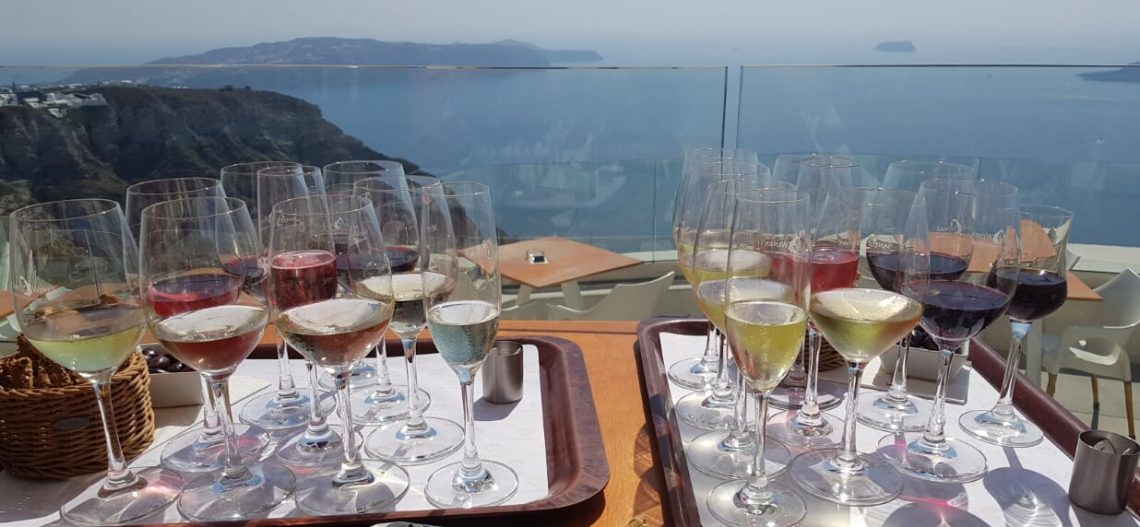

Santorini, a Greek island in the southern Aegean Sea, southeast from the Greek mainland. Close your eyes think of Greece and you will come up with something along the lines of Santorini. White washed buildings with their blue domed roofs hugging the edge of the cliffs, providing incredible views of the blue glistening sea.
But, Santorini is also famous for wine……. and as soon as we booked the trip I was looking for a wine tour to get on board with. I stumbled across Santorini Wine Tours on TripAdvisor. Their reviews were very good, so booked it pretty quickly. The date was set and I was pretty excited!
We were picked up from our hotel by our wine guide and driver in a in a swanky air conditioned mini bus (It’s very very hot in Santorini so this is a must) and we drove from Kamari picking up another three groups of people before arriving at our first winery of the day.
Boutari Winery
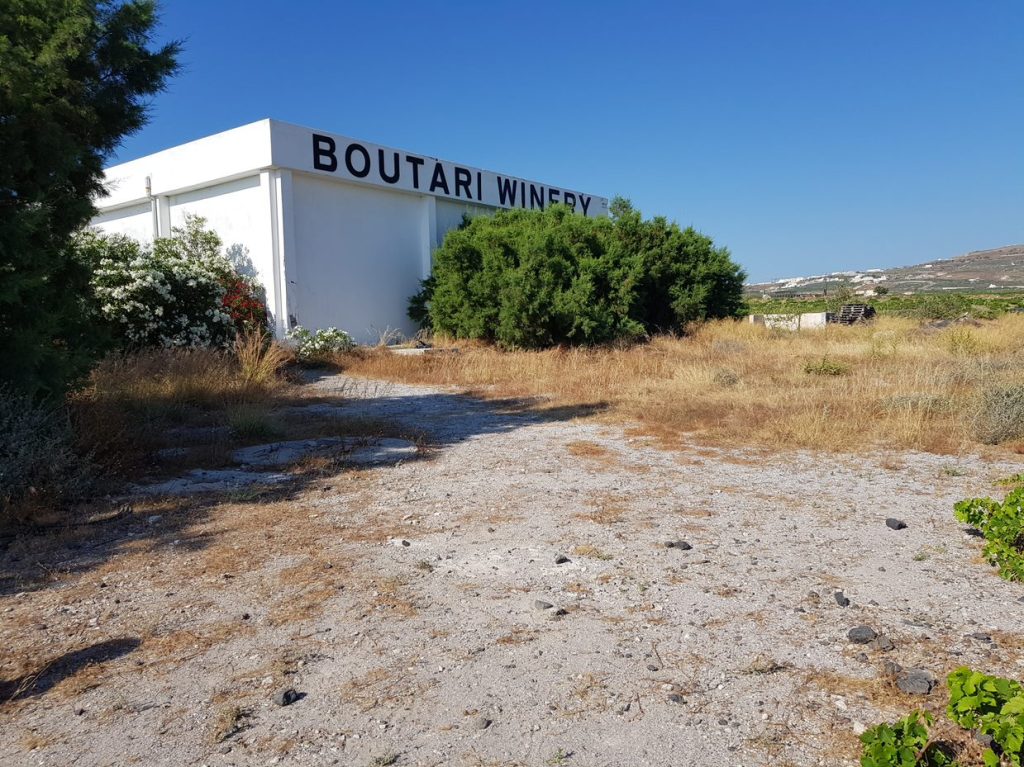
Winery number 1
The winery didn’t look that impressive from the outside but we were escorted in by our tour guide and once we got in out of the sun, we were greeted with a modern spacious tasting room with shop, bar and celler below. I think they have a kitchen on site too so you can try some famous Greek dishes.
The tables were set up for the tasting, but before we got stuck in we were taken around the cellar and then out to the vineyard round the back.

I’ll cover below what we learned;
I have to admit I didn’t know anything about Santorini wines or their wine making practices, so I was ready for some information and it came thick and fast!
Firstly Santorini is a volcanic island and was the center of an ancient volcano that erupted roughly 1640–1620 BC. One of the largest ever known volcanic eruptions. The resultant soil on the island is poor, low in potassium, dry but high in certain minerals. Not many things can grow on the island due to soil and the lack of rainfall.
But the vines on the island have managed to survive and grow here for centuries. In fact these vines are some of the oldest around centuries old, unaffected by phylloxera as it could not survive in the soil on the island. (Phylloxera – tiny insect that feeds of the roots of vines making them prone to disease and infection. It destroyed 99.9% of the European vineyards during the 19th century!).
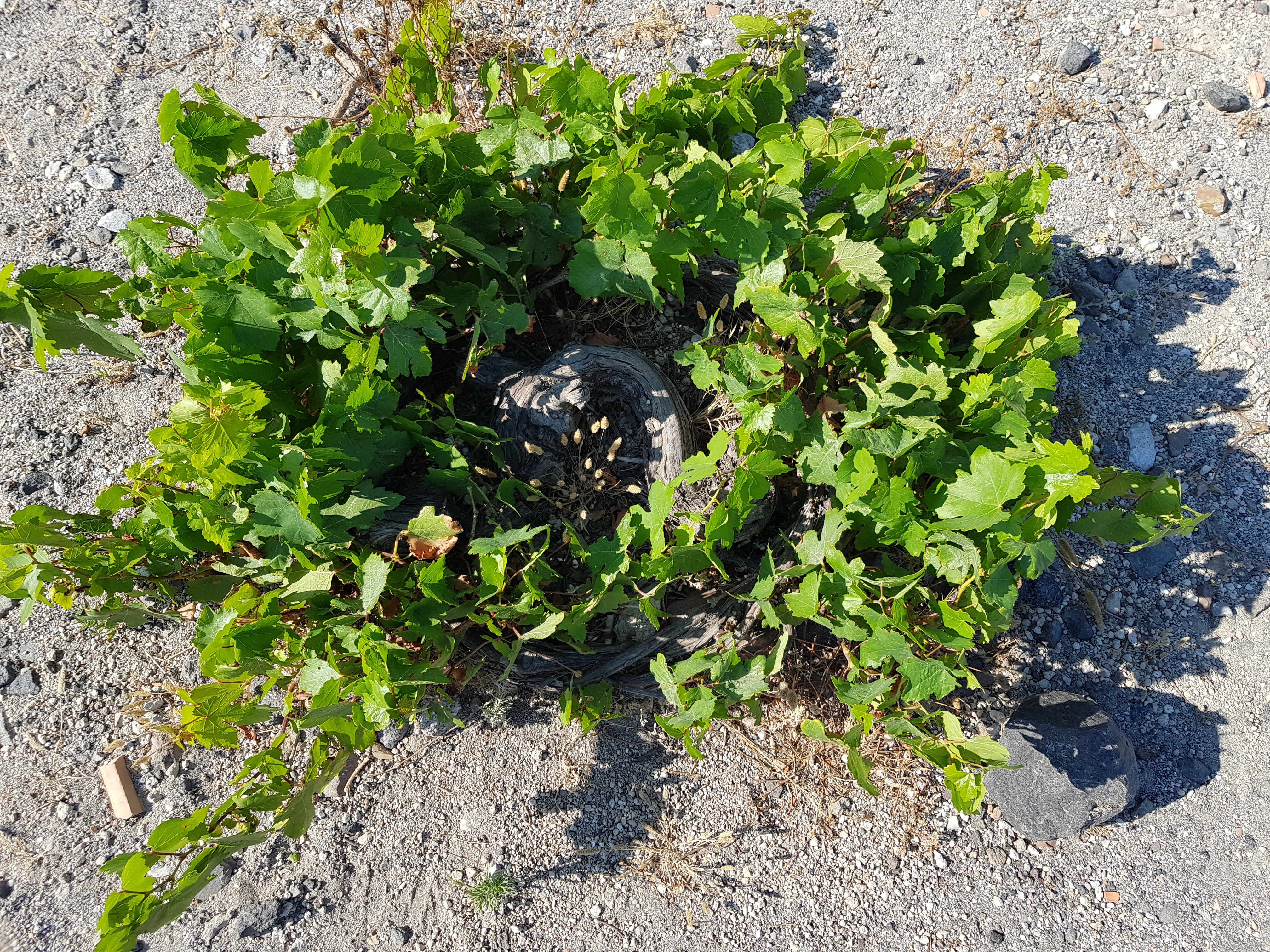
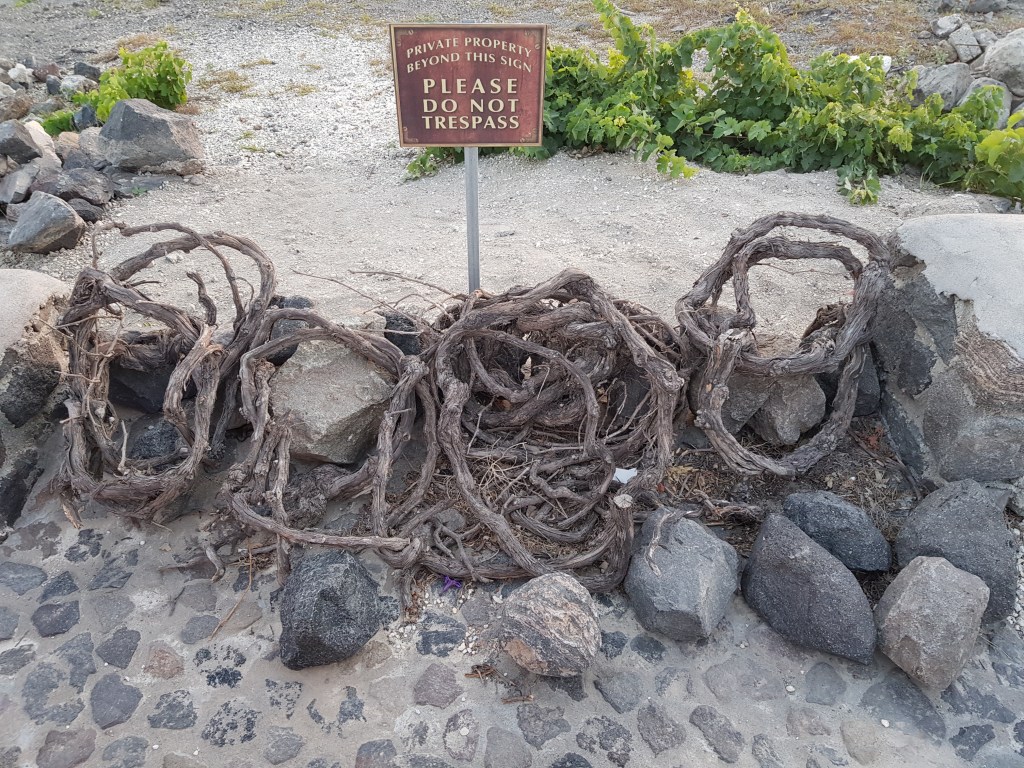
I love an indigenous grape variety and Santorini has a few. Representing the whites we have Assyrtiko, Athiri and Aidani and reds, Mandilaria and Mavrotragano. Assyrtiko seems to be the main grape of the island and the others are a supporting cast. It was explained that the grape growing method was slightly different here. Missing were the trellises I have seen previously. The technique grow the vines close to the ground and weave them into baskets called a ‘kouloura’. This method protects the grapes from the extreme wind and sun on the island.
Santorini also makes a special sweet wine called ‘Vinsanto’. It has to be mainly made from the famous Assyrtiko grape variety and is aged for a minimum of 24 months in oak barrels. The grapes are picked later in the season and dried.
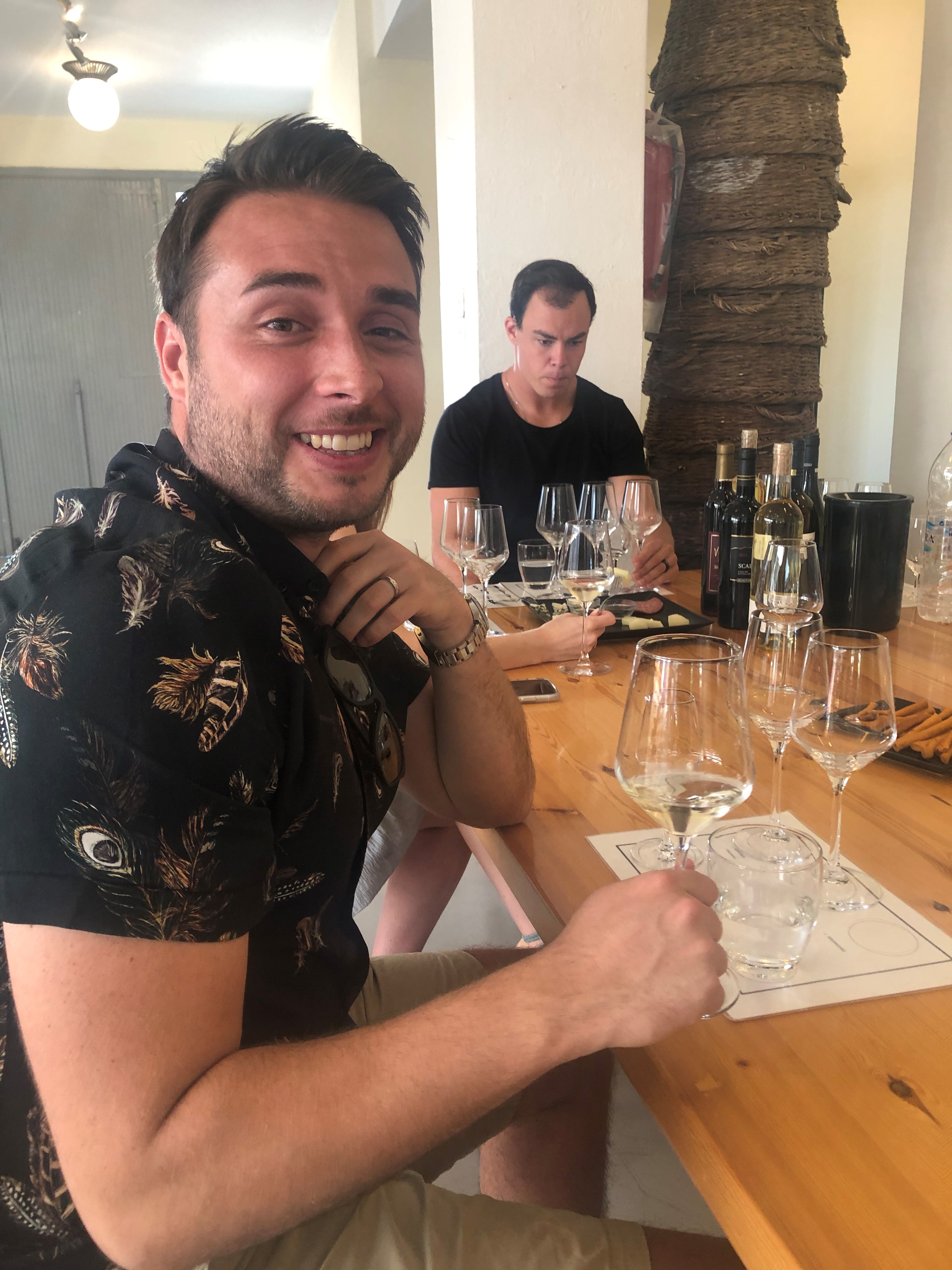
Anyway enough with the information overload, back into the tasting room we went to try some of their wines.
We started with their Assyrtiko- Santorini Boutari. My first ever Assyrtiko and it didn’t disappoint. A pale golden colour, minerally, citrus, high acidity. Absolutely delicious. This would be a sign of things to come on this trip.
We then went on to try another white and a red, which were really good but I won’t talk about these here as they weren’t from Santorini. Boutari has other locations in Greece.
And finally the Vinsanto, again my first ever. I was expecting it to be super sweet, a little like a Hungarian Tokaji after hearing it was a type of desert wine but I was a quite surprised. It was much more brown in colour and less sweet. We tried the 2002, aged 12 years. It tasted of dried fruits, like raisins and figs, sweet but not too sweet.
Gavalas Winery
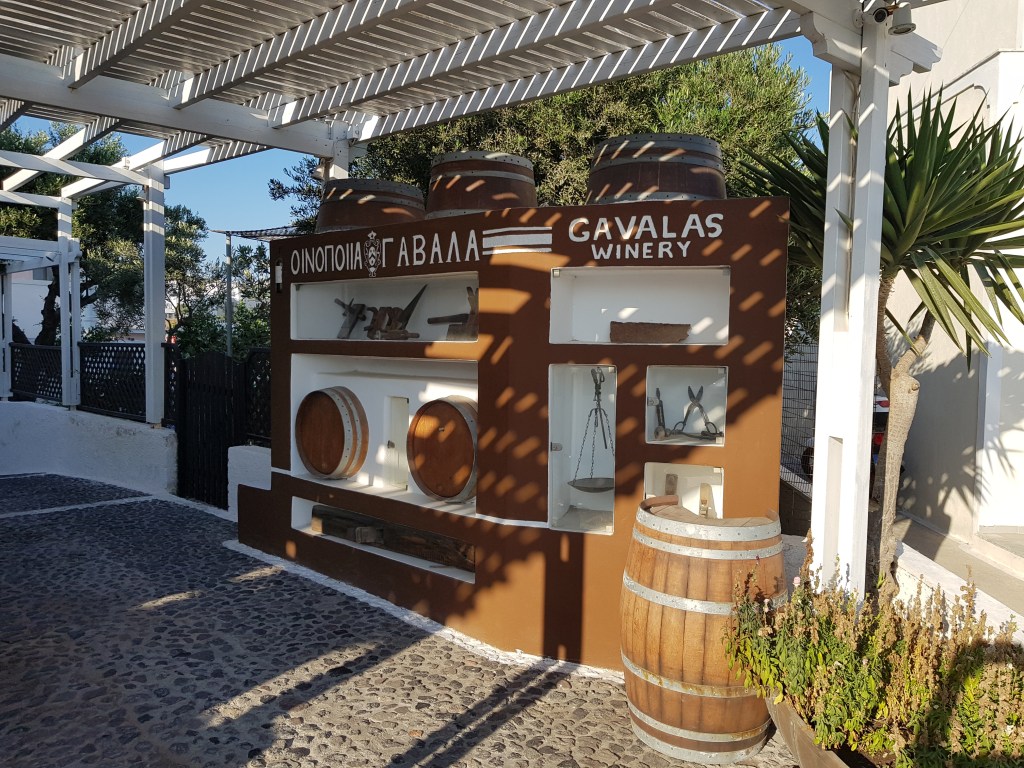
On to the second winery of the day, Gavalas. We were told that this was one of the oldest wineries on the island, over 300 years old! The entrance displayed all the old wine making tools and barrels cool if you ask me.
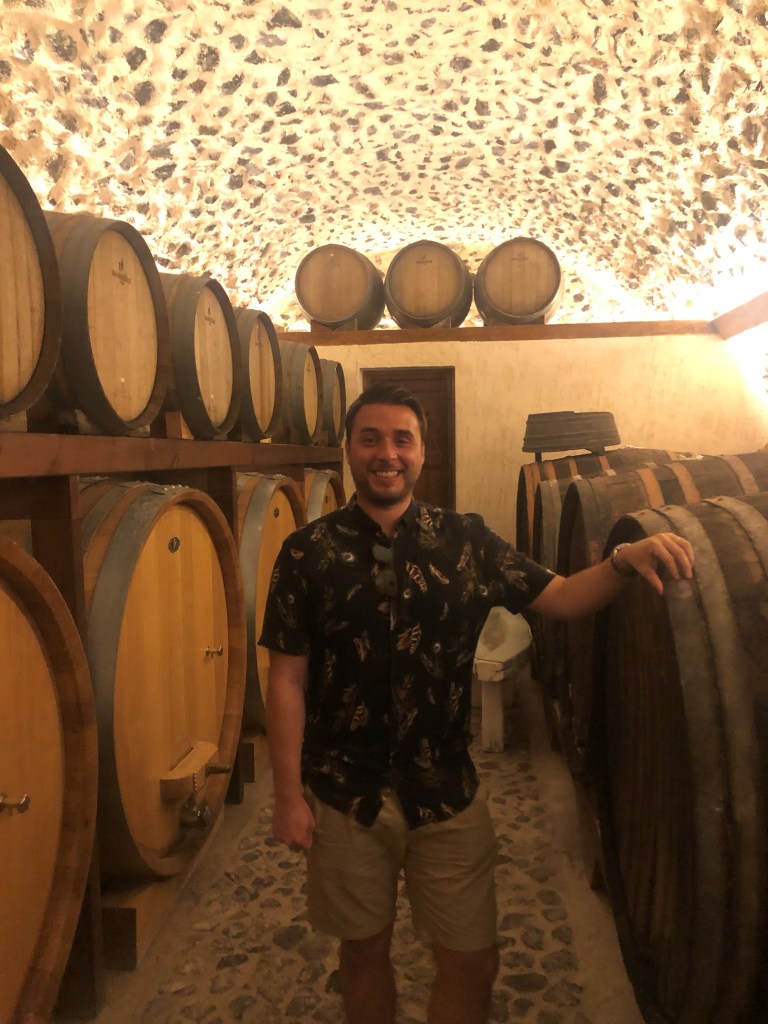
We were taken on a tour and shown the very old rooms in the winery and shown all the old giant barrels. I think they were made from Russian oak……. strange, before being shown to our seats for a tasting.
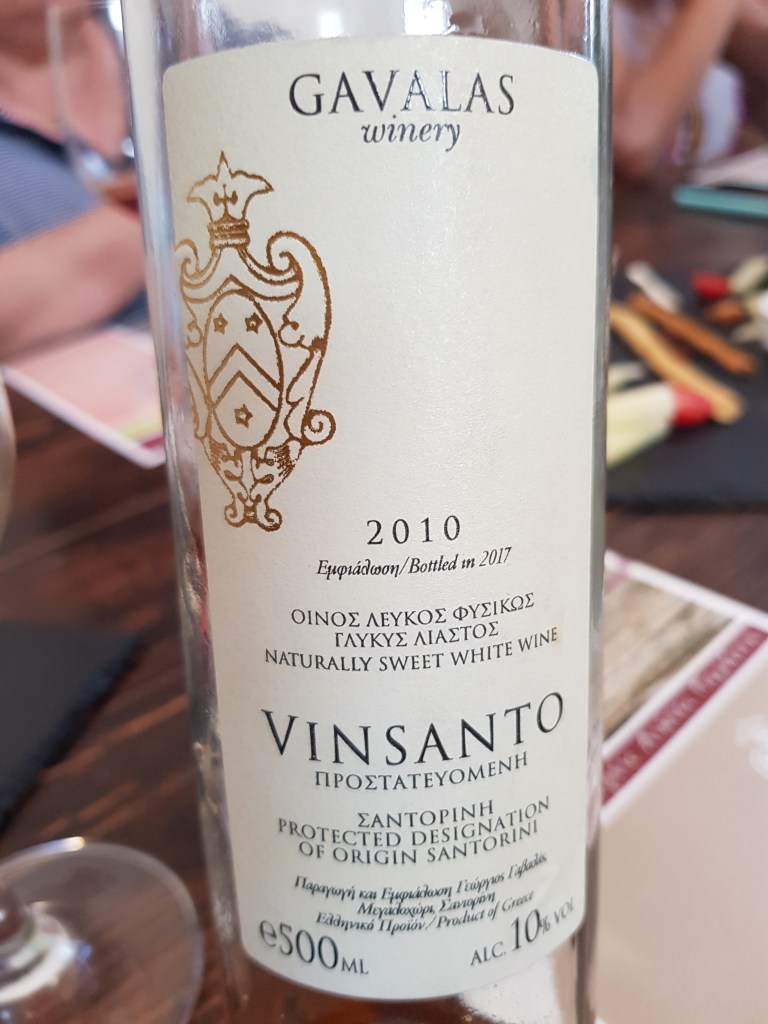

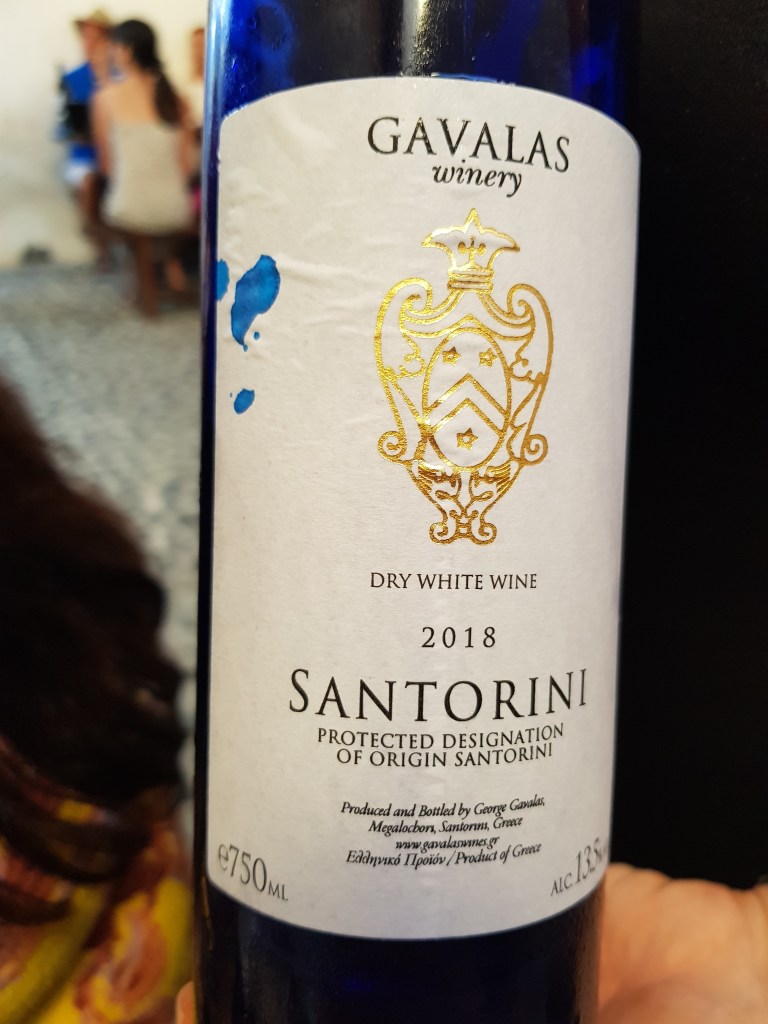
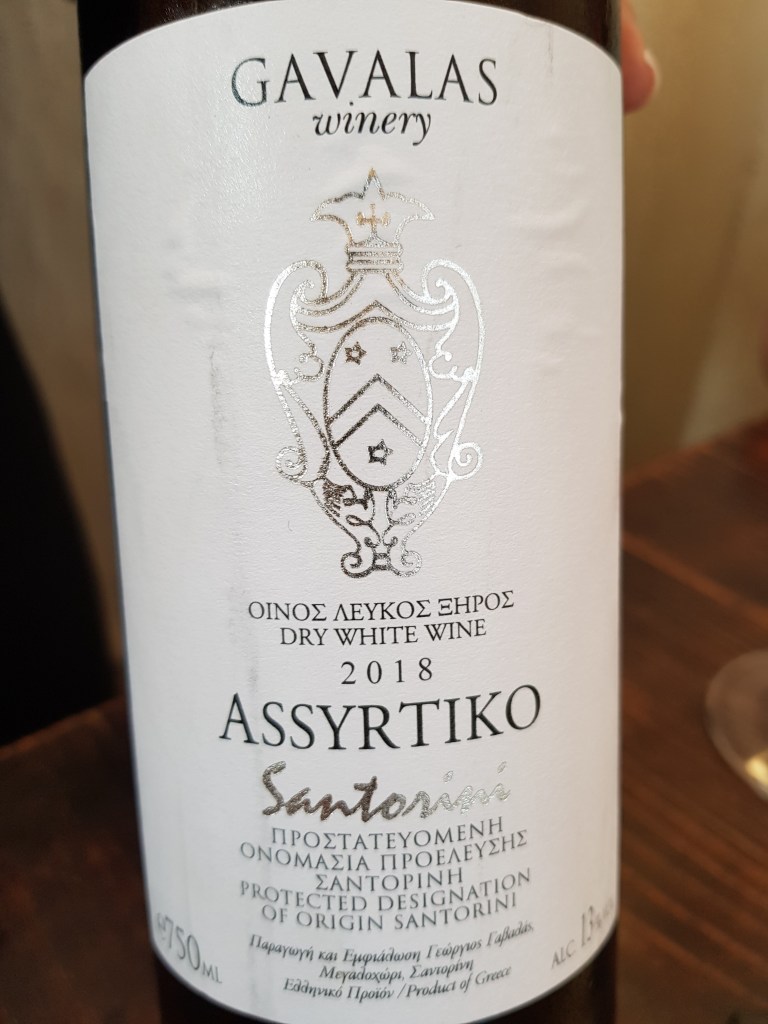
First we tried two Assyrikos, different manufacturing techniques, one slightly higher alcohol and in a fancy blue bottle! Again similar to the previous winery, pale golden colour, minerally, citrus, high acidity. Right up my street.
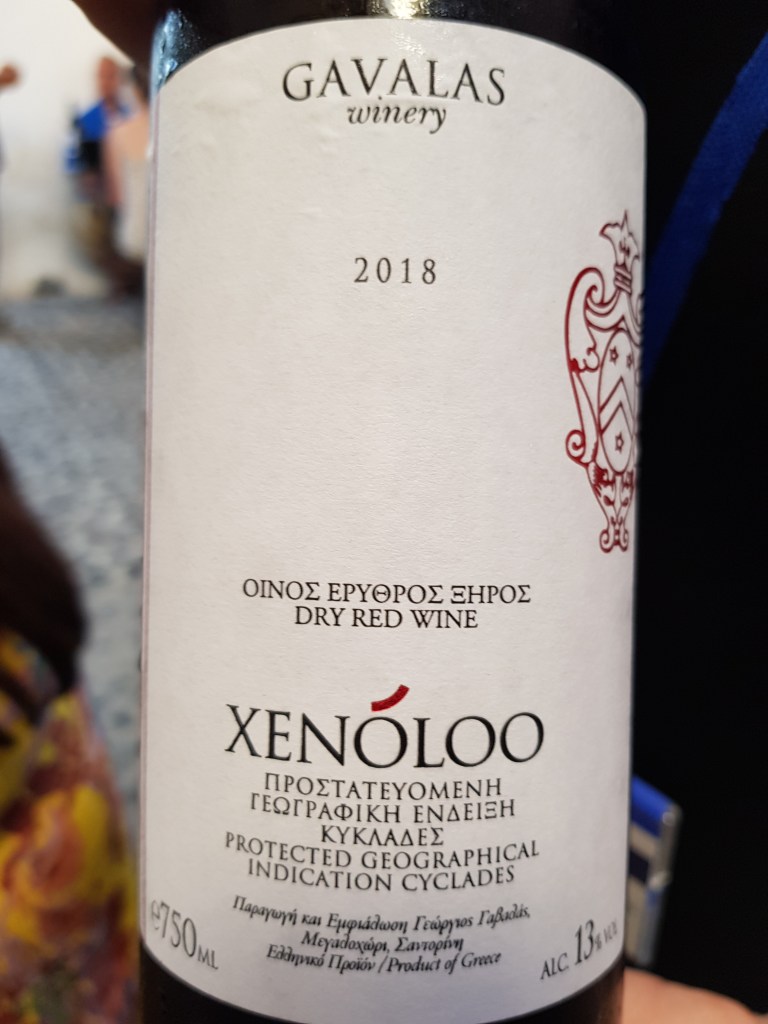
The next wine was a red. The Xenoloo which was made from Mavrotragano 50% – Mandilaria 45% and Athiri 5%. Grown on three separate vineyard sites on the island. It was nice, but I’m a fan of big red wines and this was light bodied. Ideal for the sunny climate in Santorini or if your a Pinot noir/Rosé fan but not for me I’m afraid.
Finally we tried their Vinsanto. The 2010 bottled in 2017. Absolutely delicious! I’m now a fan of these dark, intense dried fruits, caramel wines.
Venetsanos Winery
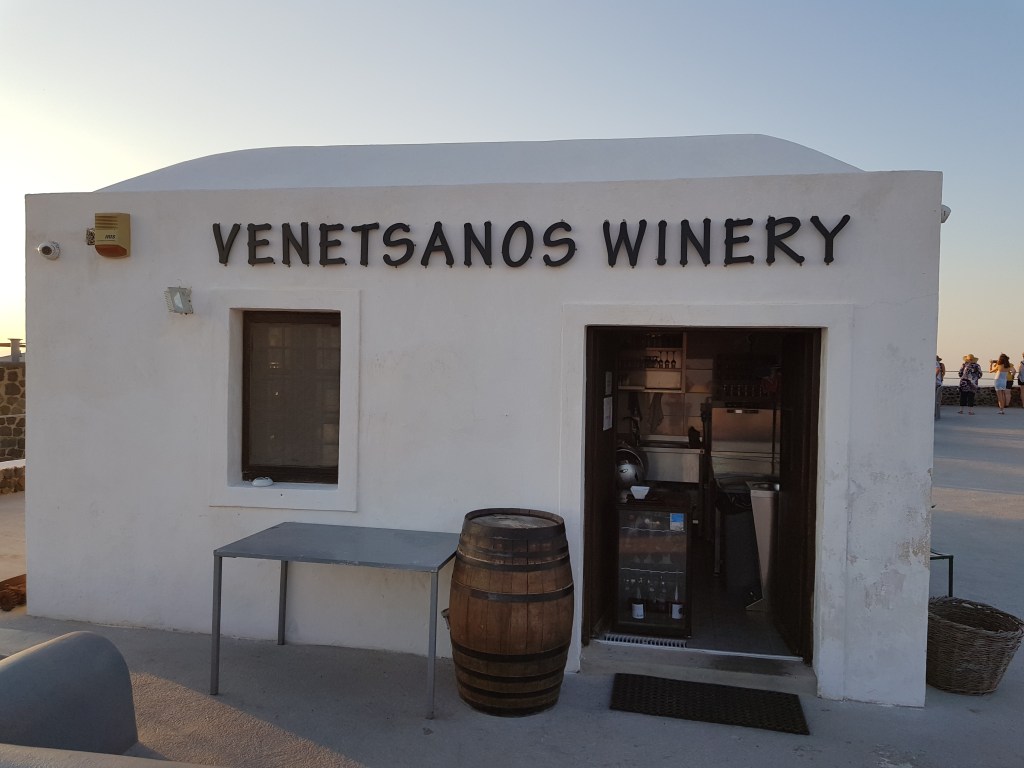
Third and final stop! Venetsanos Winery. By this point everyone was feeling a little tipsy and had recieved information throughout the day already so the tour of the old wine making facility was brief.
The views from this winery were spectacular, so it was hard to concentrate! You get a beautiful view of Santorini here, one of the best on the island. I highly recommend coming here if you’re visiting the island, especially at sunset.
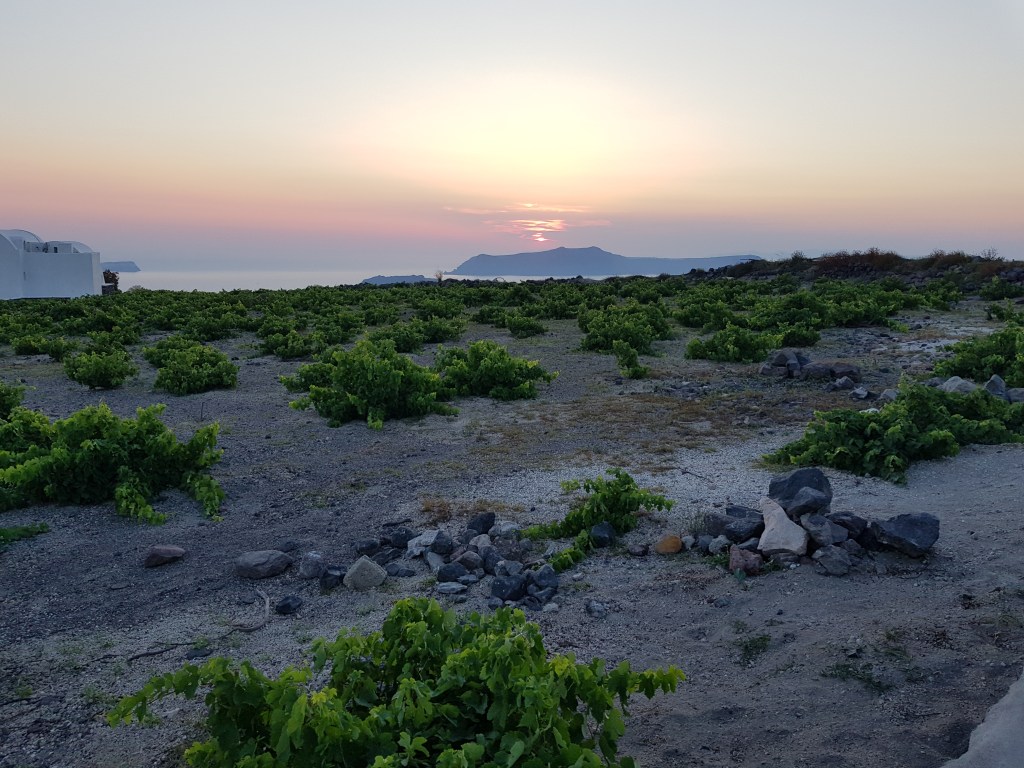
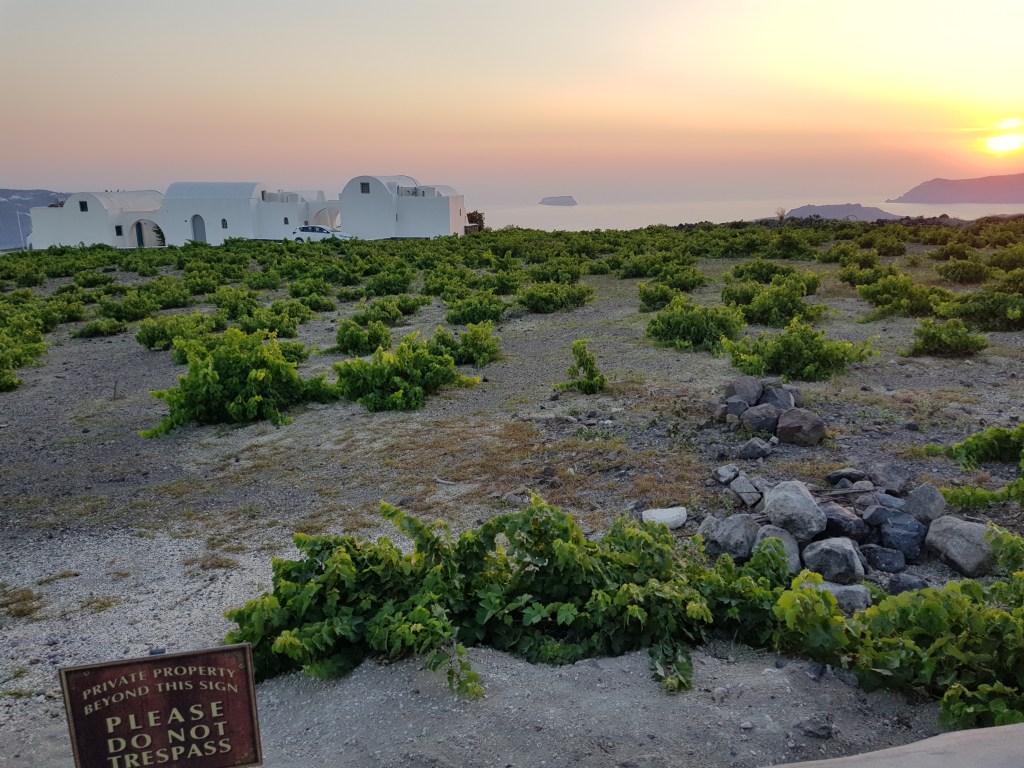
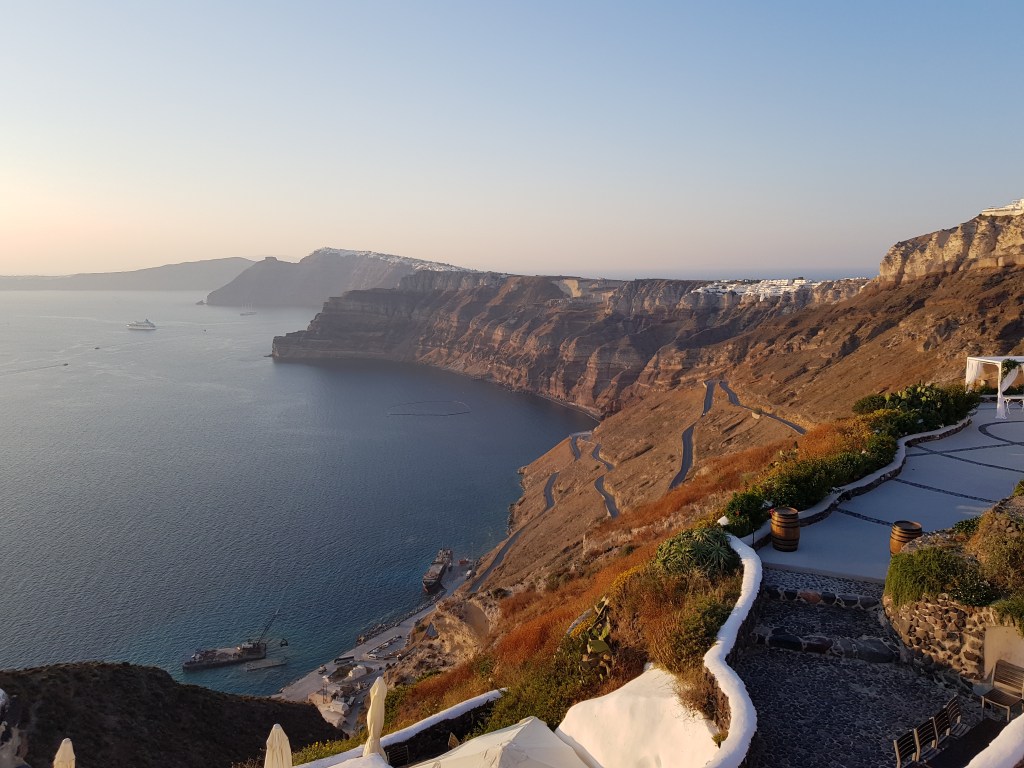
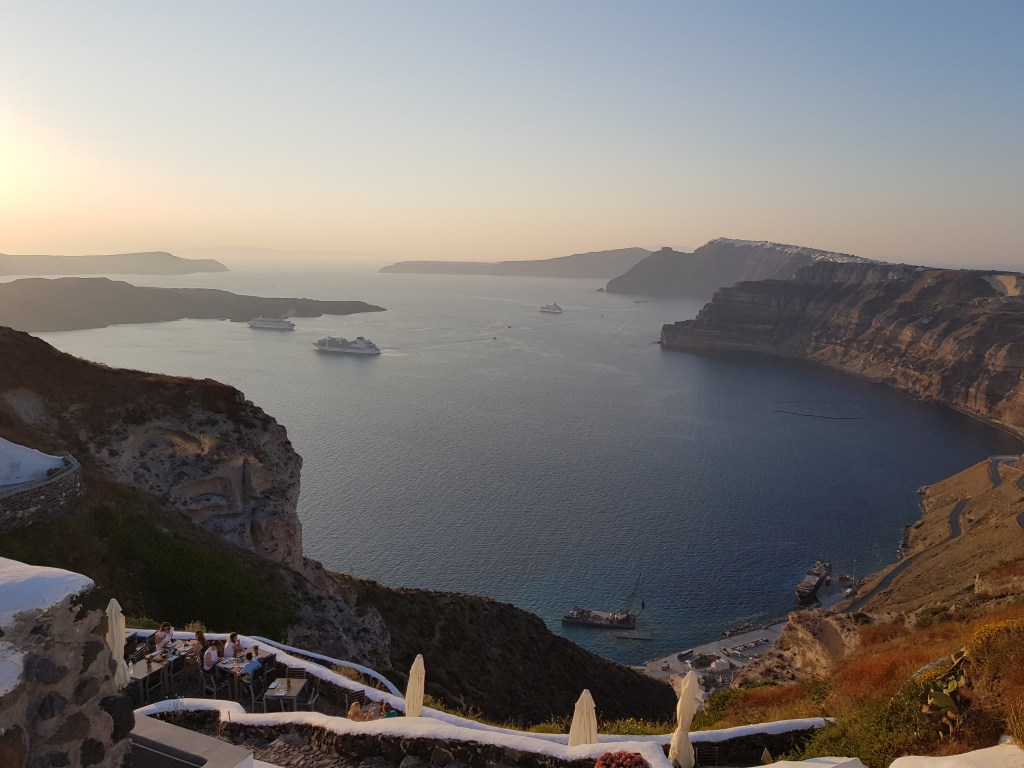

Once people had taken in the view, photographs were taken and the sun had set we sat down to taste the vino….Yamas!
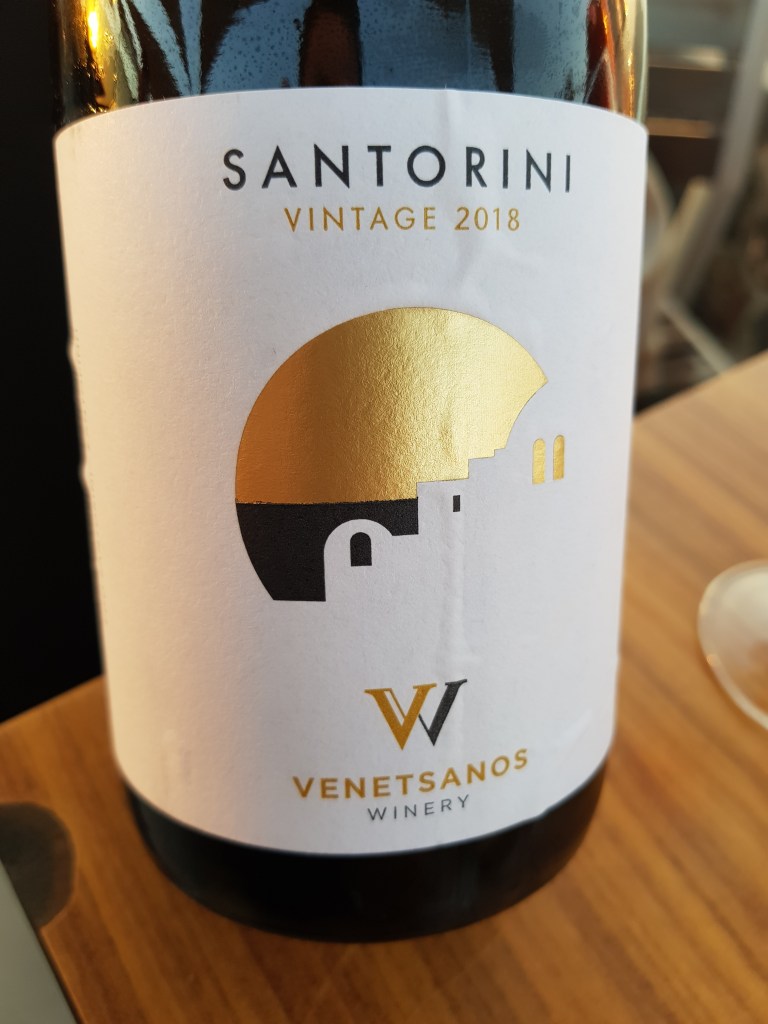
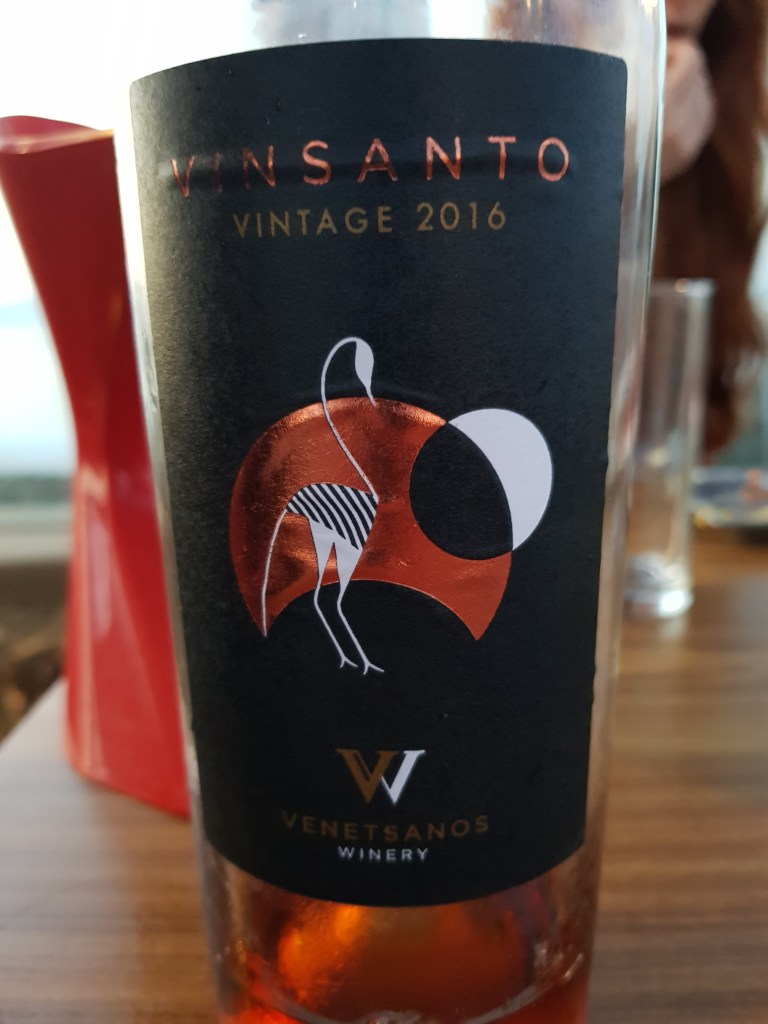
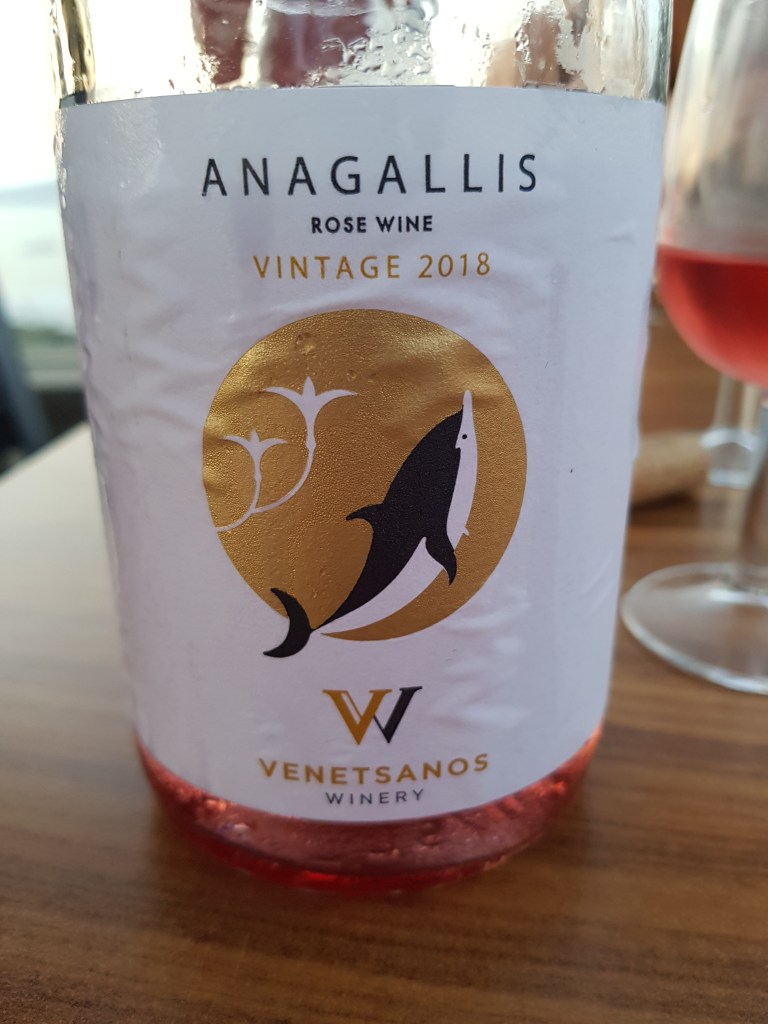
We started with two white wines made from Assyrtiko. The first the “Santorini” was fermented in stainless steel tank, whilst the second “Nykteri” was made using French oak barrels. The Nykteri was a little more rounded with vanilla/oak flavours.
The tour finished off with……. Of course, their vinsanto! Typical butterscotch, vanilla and almond flavours.
Overall, a fantastic wine tour with stunning views, well worth trying if you’re visiting Santorini 🇬🇷

 About the Grape